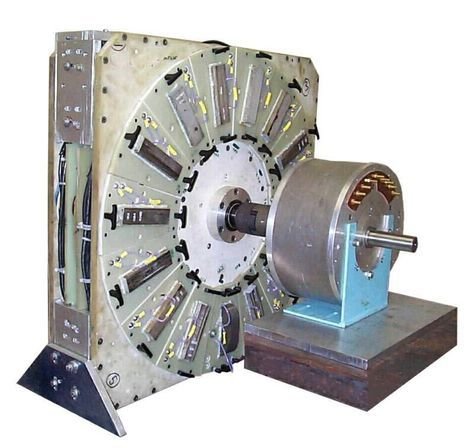
The idea of a Zero Point Energy Generator DIY project has attracted attention from people interested in physics, alternative energy, and experimental technology. The phrase often refers to the possibility of creating a device that extracts usable electrical power from zero-point energy, the lowest-energy state associated with quantum fields. While zero-point energy is a legitimate concept in modern physics, claims about building a simple generator that produces unlimited usable energy from it require careful examination.
Understanding the difference between established quantum physics and speculative generator concepts is important. Physics provides strong evidence that quantum systems retain fluctuations even in their lowest-energy states. However, that does not automatically mean those fluctuations can be converted into continuous, freely available electrical power.
Understanding Zero-Point Energy
Zero-point energy describes the residual energy present in a quantum system even when it is cooled to its lowest possible energy state. In classical physics, an object could theoretically reach a state of complete rest. Quantum mechanics changes this picture because particles and fields are governed by uncertainty principles and quantum fluctuations.
A useful example is the quantum harmonic oscillator. Even at its ground state, it possesses a minimum energy rather than having exactly zero energy. This minimum is commonly associated with zero-point energy.
Quantum field theory extends this idea to fields throughout space. According to the theory, what appears to be empty space is not simply an absolute void. Quantum fields can exhibit fluctuations, and these effects can have measurable consequences under appropriate physical conditions.
However, the existence of zero-point energy does not establish that it can be harvested like sunlight, wind, or chemical energy.
Why a Zero Point Energy Generator DIY Idea Is Challenging
A Zero Point Energy Generator DIY concept generally proposes some type of device that interacts with quantum fluctuations and converts them into useful electrical output. The central scientific problem is energy extraction.
A functioning generator needs an energy difference, a changing field, a chemical reaction, mechanical work, electromagnetic interaction, or another physical process that allows energy to move into a usable form. A device cannot simply obtain continuous net energy without an appropriate source or change in the system.
Zero-point energy represents a ground-state condition. If a system is already in its lowest-energy state, extracting additional energy while leaving the system unchanged presents a fundamental challenge.
This is one reason why experimental claims involving self-running generators require particularly careful measurements. Electrical output alone does not demonstrate that energy has been obtained from zero-point fluctuations.
Quantum Fluctuations Are Real Physical Phenomena
It is important not to confuse skepticism about energy-generation claims with skepticism about quantum physics itself. Quantum fluctuations are an established part of modern theoretical physics, and phenomena associated with quantum vacuum effects can be experimentally investigated.
One well-known example is the Casimir effect. When two suitable conducting surfaces are positioned extremely close together, quantum electromagnetic effects can contribute to a measurable force between them. The phenomenon demonstrates that quantum vacuum behavior can produce physical consequences.
Nevertheless, observing the Casimir effect does not mean that a simple arrangement of plates can serve as a continuous source of unlimited electrical power. Moving physical components, changing configurations, or resetting a system can require energy.
The distinction between observing a quantum effect and extracting net usable energy from it is therefore essential.
The Role of Thermodynamics
Thermodynamics provides another important framework for evaluating Zero Point Energy Generator DIY claims. The first law of thermodynamics states that energy is conserved. A device producing electrical energy must receive energy from somewhere or draw down energy stored in a changing physical system.
The second law introduces additional restrictions concerning entropy and the direction of natural processes. These principles do not disappear simply because a device involves quantum phenomena.
A proposed generator that continuously produces more usable energy than it receives would therefore require extraordinary experimental evidence. Researchers would need to account for every possible source of input, including batteries, electromagnetic interference, temperature differences, mechanical vibrations, measurement equipment, and environmental energy.
Why DIY Experiments Can Produce Misleading Results
Building experimental electronics at home can be an excellent way to learn about electricity, magnetism, and measurement. However, unusual voltage or current readings can have ordinary explanations.
For example, a circuit may pick up radio-frequency signals from its surroundings. Capacitors can store charge, inductive components can generate transient voltages, and measurement instruments can influence sensitive circuits. Ground loops and electromagnetic coupling can also create unexpected readings.
A multimeter showing voltage does not necessarily mean that a circuit can deliver sustained useful power. The critical measurement is often available power under a controlled load and for a clearly defined period.
For this reason, a serious Zero Point Energy Generator DIY investigation should focus on repeatable measurements rather than impressive voltage readings alone.
How Scientists Evaluate Energy Claims
Scientific experiments begin by defining measurable quantities and controlling variables. A proposed energy generator would need a carefully characterized input-output balance.
Researchers could measure electrical power entering a device, electrical power leaving it, temperature changes, mechanical inputs, electromagnetic inputs, and other relevant forms of energy. Measurements should be repeated using calibrated instruments and appropriate controls.
A particularly important test is a blind or controlled comparison. If a device appears to produce power, the same measurement setup should be tested without the proposed energy-generating mechanism. This can help identify environmental effects and instrument errors.
Independent replication is equally important. A remarkable result that cannot be reproduced under controlled conditions remains uncertain.
Zero-Point Energy Versus Conventional Energy Technology
Conventional generators operate through well-understood energy transformations. Solar panels convert electromagnetic radiation into electricity. Wind turbines convert kinetic energy from moving air into mechanical and electrical energy. Batteries convert stored chemical energy into electrical energy.
These technologies have identifiable energy sources and measurable conversion processes.
A hypothetical zero-point generator would require a similarly demonstrable mechanism showing how ground-state quantum effects produce a sustained net energy output. At present, the existence of zero-point energy alone does not provide such a mechanism.
This distinction helps explain why mainstream energy engineering focuses on sources whose energy flows can be measured and controlled.
A Better Way to Explore the Concept
People interested in a Zero Point Energy Generator DIY project can approach the subject as an educational physics experiment rather than assuming that unlimited energy generation is already established.
Experiments involving capacitors, inductors, oscillators, electromagnetic fields, and sensitive voltage measurements can demonstrate principles relevant to the discussion. Students can investigate how circuits store and transfer energy, how oscillations behave, and how measurement conditions affect results.
These experiments can provide a practical foundation for understanding the difference between stored energy, environmental energy, transient effects, and genuine continuous power generation.
Safety should also remain a priority. Even relatively simple electronic experiments can involve high voltages, stored electrical energy, hot components, or unexpected current paths. Proper insulation, current limiting, and appropriate measurement equipment are essential.
What Physics Currently Tells Us
Physics supports the existence of zero-point energy as part of quantum theory. It also supports measurable effects associated with quantum vacuum behavior. What remains unsupported is the broad claim that an ordinary DIY generator can continuously extract unlimited usable electrical energy from the quantum vacuum without an external energy source or corresponding change in the system.
That distinction is central to evaluating online claims about free-energy devices.
The scientific value of these ideas comes from asking precise questions: What is the energy source? What is the input? What is the output? Can the result be reproduced? Are the measurements independently verified? Does the experiment comply with established physical principles?
Conclusion
A Zero Point Energy Generator DIY concept can be an interesting starting point for learning about quantum mechanics, vacuum fluctuations, electromagnetism, and thermodynamics. Zero-point energy itself is a legitimate feature of quantum physics, but its existence should not be confused with proof of a practical free-energy generator.
The most productive approach is to separate established scientific observations from hypothetical engineering claims. Careful experimentation, accurate measurement, controlled testing, and independent replication are essential when investigating unusual energy-generation proposals.
Physics does not discourage curiosity about zero-point energy. Instead, it provides the tools needed to investigate such ideas rigorously and determine which claims can withstand experimental testing.